


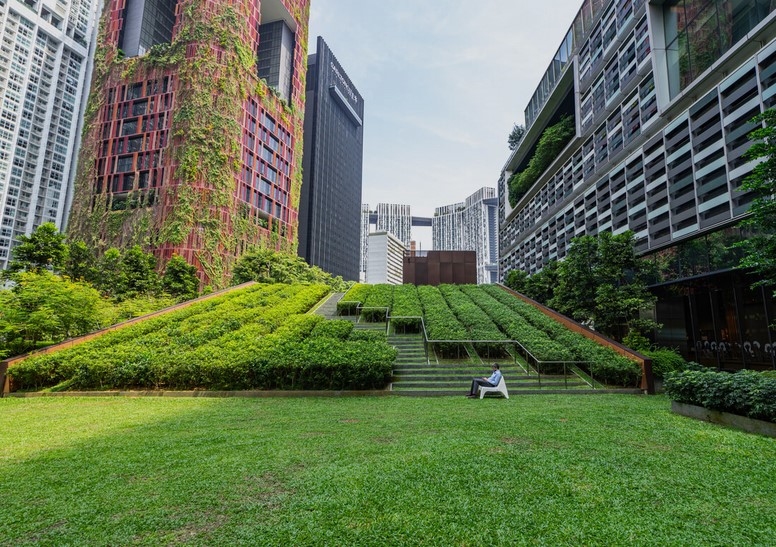
To understand what a landscape contractor Singapore actually does requires examining not merely the superficial aesthetics of manicured gardens and ornamental plants, but rather the intricate machinery of expertise, regulation, and execution that transforms bare earth into functional outdoor environments. In a city-state where land represents the most precious commodity, the role of professional landscape contractors has evolved into something far more complex than simple gardening. These contractors operate at the intersection of horticulture, engineering, project management, and regulatory compliance, wielding influence over how Singapore’s limited green spaces take shape and endure.
The Institutional Framework
The development of Singapore’s landscaping industry cannot be separated from the government’s broader vision for a “Garden City.” Since the 1960s, when Lee Kuan Yew initiated systematic greening programmes, the landscape contracting sector has operated within an increasingly sophisticated regulatory framework. The National Parks Board establishes standards that contractors must meet, from plant selection guidelines that favour native species to installation techniques that ensure long-term survival in tropical conditions.
A landscape contractor singapore today must navigate multiple approval processes. Projects often require coordination with various authorities: the Urban Redevelopment Authority for land use compliance, the Building and Construction Authority for structural elements, and the Public Utilities Board for drainage and water features. This bureaucratic complexity means that successful contractors maintain relationships across government agencies, understanding not just what regulations require but how to move projects through approval channels efficiently.
The Mechanics of Project Execution
The process begins long before any soil is turned. Site assessment involves detailed analysis of existing conditions: soil composition, drainage patterns, sun exposure throughout the day, proximity to existing trees whose root systems might interfere with new installations. A competent landscape design contractor documents these factors meticulously, understanding that design decisions made on paper must ultimately confront physical reality.
The design phase itself requires balancing competing priorities. Clients want aesthetic appeal, but plants must survive Singapore’s climate: intense sun, heavy rainfall, high humidity. Budget constraints limit plant selection and hardscape materials. Maintenance requirements affect long-term costs. As one industry veteran notes, “Every design decision creates a maintenance obligation. Our job is ensuring clients understand what they’re committing to maintain, not just what looks impressive at installation.”
The construction phase reveals where theoretical plans meet practical challenges. The sequence of operations matters enormously:
- Site preparation including soil amendment and grading for proper drainage
- Hardscape installation of pathways, walls, and structural elements
- Irrigation system placement before final grading
- Planting in stages based on plant size and establishment needs
- Mulching and finishing to control weeds and retain moisture
Each phase depends on completing previous phases correctly. Installing plants before irrigation systems wastes time and risks plant health. Poor drainage undermines everything built above it. The professional landscape contractor Singapore manages these sequences, coordinating various trades and ensuring work proceeds in logical order.
The Labour Question
Behind every completed landscape project lies human labour, often invisible to clients admiring finished results. Singapore’s landscaping industry relies heavily on foreign workers, primarily from Bangladesh, India, and Myanmar. These workers perform the physical labour that transforms designs into reality: digging, hauling, planting, building.
The industry’s dependence on foreign labour creates ongoing challenges. Work permit quotas limit contractor capacity. The physical demands of outdoor work in tropical heat raise occupational health concerns that responsible contractors must address. The landscape construction contractor who maintains a stable, trained workforce gains competitive advantage, able to take on projects with confidence that qualified teams will execute them properly.
Technical Competence and Specialisation
Modern landscaping encompasses diverse technical domains. Irrigation systems require understanding water pressure, flow rates, and coverage patterns. Hardscape construction demands knowledge of structural integrity and material properties. Lighting installations involve electrical systems and aesthetic considerations.
Some landscape contractors Singapore specialise in particular project types: rooftop gardens requiring waterproofing expertise, vertical greenery systems demanding specialized irrigation, native plant landscapes focusing on ecological restoration. This specialisation reflects the industry’s maturation, moving beyond general gardening toward technical expertise in specific domains.
The Maintenance Reality
Installation represents only the beginning. Landscapes require ongoing maintenance to fulfil their design intent. Plants grow, requiring pruning to maintain shapes and sizes. Irrigation systems need adjustment as plants establish and water requirements change.
Many landscape maintenance contractors observe that design decisions made during installation profoundly affect maintenance costs. High-maintenance plants require frequent intervention. Complex designs create labour-intensive upkeep. The distance between design ambition and maintenance reality often surprises property owners who focused solely on initial appearance.
Economic Structures
The industry’s economics reveal much about how projects actually happen. Contractors typically work on fixed-price contracts, assuming risk that actual costs will match estimates. Accurate costing requires detailed quantity surveying: calculating exact plant numbers, material volumes, labour hours.
Cash flow presents ongoing challenges. Materials must be purchased before clients pay. Labour costs accumulate throughout project duration. Retention sums withheld until project completion tie up capital. Smaller contractors particularly struggle with these financial pressures.
The Path Forward
Understanding Singapore’s landscaping industry requires appreciating its complexity. Behind attractive gardens lies intricate coordination of expertise, labour, materials, and regulatory compliance. The professional landscape contractor Singapore masters these elements, transforming abstract plans into enduring landscapes that enhance Singapore’s urban environment whilst operating within economic and regulatory constraints that shape every project decision.
The industry continues evolving. Climate change brings new challenges in plant selection and water management. Technology offers tools for design visualisation and irrigation control. Sustainability pressures demand environmentally responsible practices. Yet fundamentally, the work remains grounded in understanding how plants grow, how materials endure, and how human effort transforms Singapore’s landscape, one project at a time, through the dedicated work of a skilled landscape contractor Singapore.