


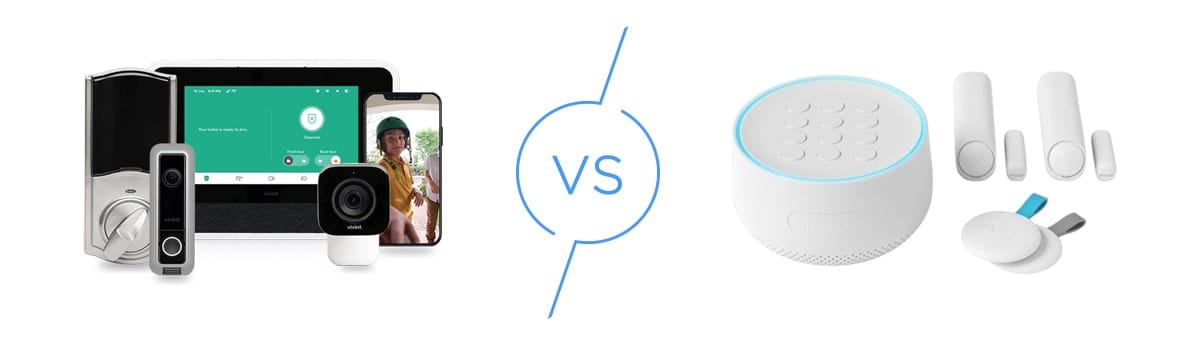
Key Takeaways from Our Vivint vs Nest Comparison:
- Nest used to offer a DIY home security system
- Both companies sell wireless, cellular systems (no landline required)
- Vivint and Nest are leaders in innovation
- Nest is owned by Google, so their devices are constantly improving
- Both systems include high-quality equipment at reasonable prices
If you’re comparing Vivint with Google’s smart home products (formerly Nest), you’re already on the right track. While Google discontinued the Nest Secure system, both companies continue to shape the smart home security landscape. Let’s break down what each offers and help you decide which approach fits your needs.
Vivint vs Nest Comparison Overview
Key Differences: Vivint vs Nest
- Nest offered DIY systems, while Vivint requires professional installation
- Vivint has 15 more years of experience than Nest
- Vivint requires long-term contracts, while Nest products work without contracts
- Nest’s monitoring plans (now discontinued) were significantly less than Vivint’s plans
- Vivint offers professional-grade security cameras with AI crime deterrence features
Key Similarities: Vivint vs Nest
- Both home security systems are cellular-powered and wireless
- Vivint and Nest offer total home automation
- Both systems offer reliable 24/7 monitoring with fast response times
- Vivint and Nest both deliver great value for the price
- Both companies offer great customer service
While these companies take different approaches to home security, both deliver sophisticated smart home technology. Now that we covered the highlights, it’s time to dig into the details.
Home Security Categories We Compare:
- Age and Influence
- Features and Technology
- Monitoring Options
- Emergency Connections / Response Times
- Security Equipment Included
- Quality of Equipment
- Home Automation
- Ease of Installation
- Customer Service
- Contracts
- Cost and Value
Age and Influence
Vivint — Founded in 1999, Vivint has evolved from a door-to-door sales company into a smart home powerhouse. With over two decades in the industry, they now serve approximately 2 million customers across North America.1 Their influence extends beyond traditional security, pioneering AI-powered cameras and solar integration that’s reshaping how we think about home protection.
Nest — Founded in 2010 by former Apple Engineers, Nest has had a laser-focus on smart home automation devices. It wasn’t until 2015, shortly after Google acquired the company, that Nest really broke into the home security space. Today they offer all things home security and automation, and their momentum continues to build. Since the company’s inception, they have sold over 11 million devices and counting.
Age and Influence Category Winner: Vivint
With 25 years dedicated to home security versus Nest’s broader smart home focus, Vivint brings deeper security expertise. Their sustained growth and commitment to professional-grade protection gives them the edge in this category.
Features and Technology
Vivint —Vivint’s systems run on proprietary technology. One of our favorite pieces of Vivint tech is the Smart Deter lurker detection in the outdoor cameras. It actively identifies and deters potential threats before they become problems. Beyond that, their touchscreen Smart Hub panel serves as your command center, supporting two-way talk with monitoring agents and integrating with over 100 smart devices. The system also works with Amazon Alexa and Google Assistant for voice control.
Nest — Google’s current Nest lineup focuses on individual smart devices rather than complete systems. Their Nest Cam lineup includes battery and wired options with 3-hour event history for free. You’ll need a Google Home Premium subscription (starting at $10 per month) for 30-day video history and familiar face detection. The Google Home app unifies control, though you’re piecing together components rather than getting an integrated security system.
Features and Technology Category Winner: Vivint
Vivint’s integrated approach with professional-grade features like Smart Deter and dedicated monitoring capabilities outperforms Nest’s collection of individual smart devices. For comprehensive security, Vivint’s technology delivers more robust protection.
Monitoring Options
Vivint —Monitoring for Vivint systems starts at $24.99 per month. However, they typically cost closer to $39.99 depending on the size of your system and the features you want. This includes 24/7 professional monitoring and smart home app control. For additional camera-capabilities, expect higher rates that can go above $49.99 per month. All plans require equipment financing or purchase, with total costs typically ranging from $600-$1,800 depending on your setup.
Nest — Since discontinuing Nest Secure, Google doesn’t offer professional monitoring for their cameras and doorbells. Instead, they provide Google Home Premium subscriptions at $10/month for all your cameras or $20/month for Google Home Premium Advanced, which includes 10 days of 24/7 video history and up to 60 days of event video history. While this gives you video storage and smart alerts, you’re essentially self-monitoring without professional backup.
Monitoring Options Category Winner: Vivint
Professional monitoring makes all the difference in home security. Vivint’s 24/7 monitoring center can dispatch emergency services when you can’t, providing true peace of mind that Nest’s self-monitoring approach simply can’t match.
Emergency Connections / Response Times
Vivint — Vivint systems use dual-path connectivity, combining Wi-Fi with cellular backup (4G LTE) to ensure your system stays connected even during internet outages. Their monitoring centers maintain average response times under 30 seconds, with redundant monitoring stations ensuring someone’s always watching. The cellular backup requires no additional setup and activates automatically if your internet fails.
Nest — Similar to Vivint, Nest offers wireless home security systems. They do not require a landline, just be sure you have cellular service in your area. Unlike Vivint, you can ‘DIY’ your Nest system by installing it yourself. But we’ll discuss installation and setup in just a bit.
Emergency Connections Category Winner: Vivint
The cellular backup and professional monitoring give Vivint a clear advantage. When seconds count in an emergency, having redundant connections and trained professionals ready to dispatch help can make all the difference.
Security Equipment Included
Vivint — Included with Vivint’s standard package, you’ll receive a modern touchscreen control panel, a handful of sensors of your choice (entry sensors, motion detectors, glass break sensors, etc.). And Vivint’s upgrades and add-ons include a sleek doorbell camera with two-way voice, a smart thermostat, loads of smart feature options, and more. There is no upfront equipment price, as the cost is included in the monthly monitoring fee.
Nest —Since Nest Secure’s discontinuation, Google sells individual devices rather than packages. The Nest Doorbell (battery) costs $179.99, while Nest Cam options range from $99.99 for indoor to $279.99 for outdoor models with a built-in floodlight. You’ll need to purchase each component separately and plan your own system. A comparable setup to Vivint’s starter package would cost around $500 to $700 upfront, but you own the equipment immediately.
Security Equipment Category Winner: Vivint
Vivint’s cohesive packages with professional design consultation ensure you get comprehensive coverage. While Nest’s à la carte approach offers flexibility, Vivint’s integrated systems provide better overall security architecture.
Equipment Quality
Vivint — Most home security companies don’t manufacture their own equipment. But Vivint isn’t most companies. These guys make much of their gear in-house, which allows them to focus on R&D, quality control, and constant improvements. All of the security equipment they offer is top-of-the-line and dressed to impress.
Nest — Nest and quality go hand-in-hand. After all, it’s Google! The equipment is well-designed, built with the best materials, and incredibly functional. If they weren’t going head-to-head against the likes of Vivint, Nest is almost a guaranteed winner.
Equipment Quality Category Winner: Vivint
Vivint takes the slightest edge in this category. Their equipment is some of the best in the business. And seeing that it’s manufactured behind their own doors, they have complete control of the final product. At any rate, we can expect to see great products from both companies well into the future.
Home Automation
Vivint — Nobody does home automation quite like Vivint with over 100 smart devices, including thermostats, locks, garage door controllers, and lighting. Their system works with Amazon Alexa and Google Assistant for voice control. The Vivint app serves as a unified control center where you can create custom rules — like having lights turn on when motion is detected or doors lock automatically at bedtime.
Nest — Similar to Vivint, Nest pulls no punches when it comes to home automation. Nest Secure works with third-party smart platforms, and Nest offers a range of its own smart devices. Customers can upgrade to enjoy the Nest Doorbell, smart locks, smart environmental monitoring devices, the top-selling Nest Learning Thermostat, and much more. Needless to say, Nest stands out as a top provider of smart home automation systems.
Home Automation Category Winner: Tie
Both platforms offer robust automation with different strengths. Vivint provides tighter security integration while Google offers broader device compatibility. Your choice depends on whether you prioritize security-focused automation or general smart home features.
Ease of Installation
Vivint — Unfortunately, Vivint requires professional installation for all systems. It typically takes three to four hours depending on your package size. While this means scheduling an appointment and being home during installation, you’re guaranteed proper setup and optimization. The technician will test all devices, train you on the system, and ensure everything integrates correctly. Some view this as old-fashioned, but it eliminates the guesswork and potential security gaps from incorrect installation.
Nest — Google Nest devices are designed for DIY installation. Most cameras install in under 30 minutes using the Google Home app’s step-by-step guidance. The app uses your phone’s camera to scan QR codes for quick pairing. Battery-powered options like the Nest Doorbell (battery) don’t even require wiring. However, you’re responsible for proper placement, Wi-Fi optimization, and troubleshooting any issues that arise.
Ease of Installation Category Winner: Nest
For those who value convenience and immediate setup, Nest’s DIY approach wins. You can have cameras running within an hour of unboxing, without scheduling appointments or installation fees.
Customer Service
Vivint —After addressing past customer service issues, Vivint now maintains an B+ rating with the Better Business Bureau.2 They offer 24/7 phone support, online chat, and a comprehensive help center. The Smart Home Pros (their technicians) also provide ongoing support after installation. However, some users still report aggressive retention tactics when trying to cancel.
Nest — Nest has a solid track record of customer service. You can get help via their website with articles and video guides, and the company puts out easy-reference tutorials on all things Nest products. There’s also a vibrant Nest community that customers can plug into and get answers to all their burning questions. Nest gets an A+ for customer service, and always has.
Customer Service Category Winner: Nest
Google’s consistent track record and multiple support channels give them the edge. While Vivint has improved dramatically, Nest’s community support and Google’s resources provide more comprehensive assistance options.
Contracts
Vivint —If you want to finance your equipment, Vivint requires a 42 to 60 month contract. Purchasing your system outright allows you to opt for month-to-month monitoring, but this large upfront cost deters many customers. The contract also comes with substantial early termination fees — you’ll owe the remaining equipment balance plus potential service cancellation fees.
Nest — Nest not only delivers A+ home security, but they also do it without requiring a contract. That’s right, Nest offers month-to-month plans, allowing you to cancel anytime. You just have to purchase the affordable home security equipment upfront, and you’re good to go. Now, if you want the service even cheaper ($19.99/mo.), a three-year contract will get you the goods. Nest is all about options, making home protection a reality for renters and homeowners alike.
Contracts Category Winner: Nest
No-contract flexibility is a major advantage in today’s mobile society. Nest’s approach respects consumer freedom and makes home security accessible to renters and commitment-averse homeowners alike.
Cost and Value
Vivint — The total cost of Vivint ownership typically runs $2,500 to $4,000 over a 5-year contract when you factor in equipment and monitoring. Monthly costs range from $24.99 to $49.99 for monitoring, plus $10 to $15 for equipment financing. However, you’re getting professional installation, 24/7 monitoring, cellular backup, and integrated smart home features. For comprehensive, professionally monitored security, the value proposition is strong despite the higher price point.
Nest — A basic Nest setup with a doorbell and two cameras costs around $400 to $500 upfront. Adding Google Home Premium at $10 per month brings your first-year cost to about $600. Over five years, you’re looking at $1,000 to $1,100 total — significantly less than Vivint. However, you’re self-monitoring and don’t get professional emergency response. For budget-conscious consumers who want smart security features without the full monitoring package, Nest offers excellent value.
Cost and Value Category Winner: Tie
These systems serve different needs at different price points. Vivint provides professional-grade monitored security at a premium, while Nest offers affordable smart home security for DIY enthusiasts. Both deliver solid value for their target audiences.
- Age and Influence: Winner – Vivint
- Features and Technology: Winner – Vivint
- Monitoring Options: Winner – Vivint
- Emergency Connections: Winner – Vivint
- Security Equipment Included: Winner – Vivint
- Quality of Equipment: Winner – Vivint
- Home Automation: Winner – Tie
- Ease of Installation: Winner – Nest
- Customer Service: Winner – Nest
- Contracts: Winner – Nest
- Cost and Value: Winner – Tie
Overall Winner – Vivint
The Bottom Line
Choosing between Vivint and Google Nest depends on your security priorities and lifestyle. Both companies lead in smart home innovation, but they serve different needs.
Go with Vivint if you’re looking for comprehensive, professionally monitored security with cutting-edge features. You’ll likely need to sign a long-term contract, but that locks you in for true 24/7 protection.
Or choose Nest if you’re looking for flexible, affordable smart home security you can install yourself. While you won’t get professional monitoring or cellular backup, Google’s ecosystem provides excellent video quality, smart features, and the freedom to expand or modify your system anytime.
link