Seamless Flooring Systems: Benefits, Applications, and Durability
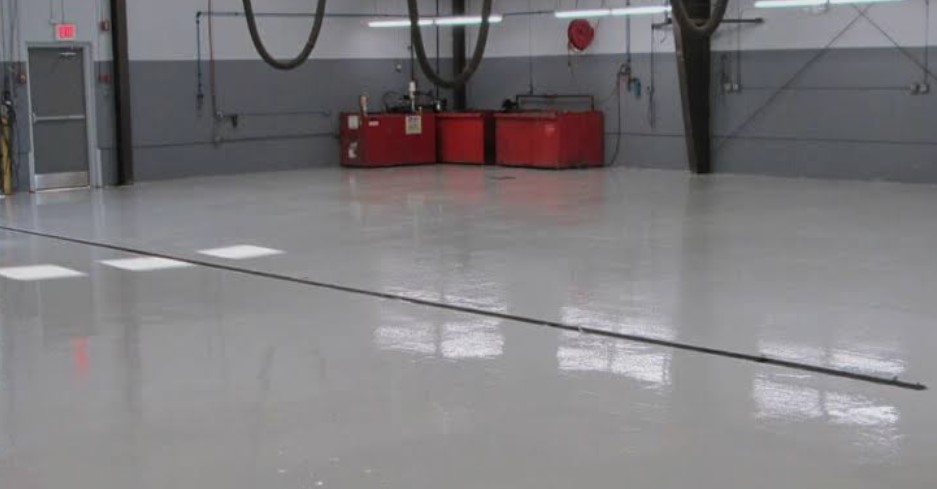
Seamless flooring has quietly transformed the way industries think about their built environments, offering a surface solution that is as scientifically elegant as it is practically effective. Consider what a floor must endure: foot traffic, chemical spills, heavy machinery, temperature fluctuations, and the relentless passage of time. Traditional flooring systems, with their joints, grout lines, and seams, accumulate bacteria, harbour contaminants, and eventually fail under these conditions. The seamless floor, by contrast, presents a unified, unbroken surface that resists these forces with remarkable consistency.
What Is Seamless Flooring?
To understand why seamless flooring systems have become the preferred choice across industrial and commercial sectors, one must first appreciate what makes a floor truly seamless. Unlike conventional tiles or planks that leave gaps at every junction, a seamless flooring solution is applied as a continuous liquid or semi-liquid material that cures into a monolithic surface. There are no joints, no grout lines, and no weak points where moisture or bacteria can infiltrate. The result is a surface that behaves as a single, integrated unit rather than a collection of individual components.
The primary materials used in seamless floor systems include:
- Epoxy resin, which offers exceptional chemical resistance and a hard, durable finish
- Polyurethane screed, valued for its flexibility and thermal resistance
- Methyl methacrylate (MMA), preferred in environments requiring rapid installation and return to service
- Cementitious urethane, engineered specifically for extreme temperature cycling environments
The Performance Advantages
The benefits of seamless flooring are not merely aesthetic. They are rooted in material science and the physics of surface behaviour under stress. When a floor contains no seams, it contains no structural vulnerabilities. Loads are distributed evenly across the entire surface rather than concentrating at joints, which means the floor can withstand heavier machinery and higher foot traffic without localised failure.
Hygiene is another compelling advantage. In Singapore’s food manufacturing and pharmaceutical sectors, regulatory standards demand surfaces that can be thoroughly cleaned and sanitised. A seamless flooring system meets this requirement with ease because there are no crevices where pathogens can establish themselves. As one industry observation from Singapore’s industrial flooring sector notes: “The move toward seamless surfaces in food processing facilities reflects not just a preference for cleanliness, but a structural commitment to food safety.”
Key performance benefits include:
- Superior chemical resistance, protecting the substrate from acids, alkalis, and solvents
- Excellent impact and abrasion resistance for high-traffic industrial environments
- Non-porous surface that prevents moisture ingress and bacterial colonisation
- Antistatic properties available for electronics manufacturing and clean room applications
- Thermal resistance suitable for cold storage and food processing facilities
Applications Across Industries
One of the most striking features of seamless flooring is its versatility. It does not serve a single industry; it serves many, adapting its properties to meet the specific demands of each environment. This adaptability is a function of modern materials chemistry, which allows formulators to tune the properties of resin systems to suit particular operational requirements.
In Singapore’s pharmaceutical manufacturing facilities, seamless resin flooring provides the controlled, hygienic environment that regulatory compliance demands. In cold storage warehouses, polyurethane screed systems resist the thermal shock caused by repeated freeze-thaw cycles. Electronics factories rely on electrostatic dissipative seamless floor systems to protect sensitive components from static discharge. Even in commercial spaces such as retail showrooms and office lobbies, seamless flooring delivers a polished, contemporary aesthetic that is also easy to maintain.
The range of applications includes:
- Pharmaceutical and biomedical manufacturing
- Food and beverage processing plants
- Cold storage and logistics facilities
- Electronics and semiconductor clean rooms
- Hospitals and healthcare facilities
- Commercial and retail interiors
Durability and Longevity
A well-installed seamless flooring system can last anywhere from 10 to 25 years, depending on the material specification, the intensity of use, and the quality of maintenance. This longevity is not accidental. It is the product of careful engineering, where the thickness of the system, the choice of aggregate, and the surface finish are all calibrated to the anticipated loading conditions.
In Singapore’s tropical climate, where humidity and temperature are consistently elevated, seamless floors must also demonstrate resistance to moisture vapour transmission from the substrate. A properly prepared concrete substrate, combined with an appropriate moisture barrier primer, ensures that the seamless resin floor maintains its adhesion and structural integrity over the long term.
Regular cleaning with pH-neutral detergents and periodic inspections for surface wear are all that is required to keep a seamless flooring installation performing at its best. Compared to tiled or jointed systems, which require ongoing grout replacement and are prone to lippage and cracking at junctions, the maintenance burden of a seamless floor is substantially lower.
Conclusion
The science of flooring is, at its core, the science of surfaces under stress and the story of how human ingenuity has progressively improved our ability to engineer those surfaces for the demands of modern industry and commerce. From pharmaceutical clean rooms to cold storage warehouses, from electronics factories to hospital corridors, the evidence is clear and compelling. When durability, hygiene, safety, and longevity are the measures by which a flooring solution is judged, there is no more rational or effective choice than seamless flooring.