Best Home Security Camera Buying Guide
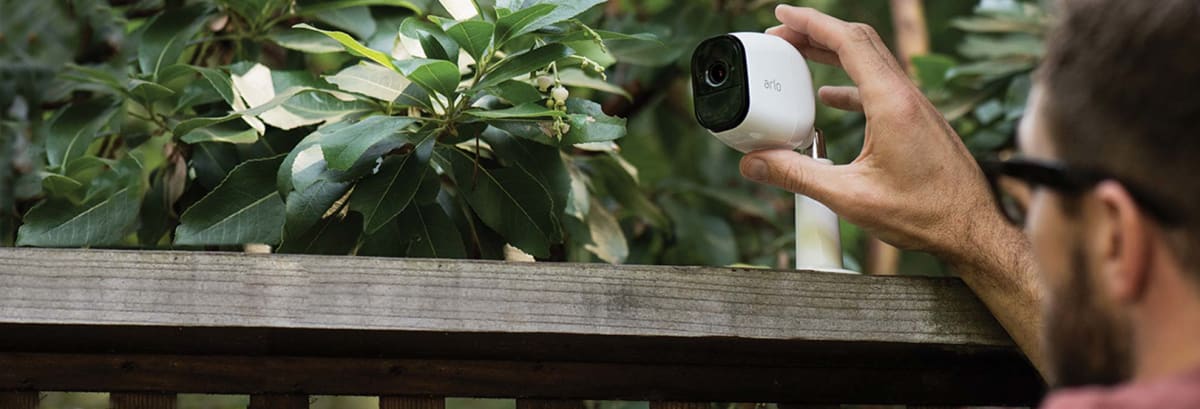
We focus our tests on how quickly a camera sends alerts to your smartphone when motion is detected—and for video doorbells, how quickly you can see who pressed the bell—as well as its video quality, smart features, data privacy, and data security.
Last year, we updated this testing methodology to reflect changes in the technology.
Since we started testing security cameras in 2017, they have become faster at loading videos and sending notifications, so we’ve adjusted our response-time test to reflect those improvements and push manufacturers to do even better. We no longer factor smart features that require a subscription into our Smart IQ score. We also now place greater emphasis on our data security and response-time tests to help you avoid purchasing a security camera that’s slower or more susceptible to security problems than its competitors.
Here are more details on our testing.
For the response-time evaluation, we measure how long it takes for the camera to detect movement occurring in its field of view and send alerts to its smartphone app. For video doorbells, we also time how long it takes for a button press to result in a smartphone alert and, subsequently, a live video feed, which is critical if someone is waiting at your front door.
For the video-quality test, we set up a lab with multiple resolution charts, everyday objects, and mannequins as stand-ins for people, and evaluate how clear the video is from cameras in good light, low light, and zero light (to test night vision). We also add different levels of backlighting to each lighting scenario. All of these tests assess whether you would be able to clearly see people or objects in the frame. The results appear in an individual video quality score for each security camera and doorbell camera in our ratings.
When it comes to smart features, we assess a wide variety of capabilities, depending on the type of home security camera. They may include activity zones, person detection, facial recognition, voice and app control (with Amazon Alexa, Google Home, and Apple Home), smartphone alerts, two-way audio, scheduling, and geofencing (which turns alerts on and off, depending on whether the device reads that your smartphone and you, presumably, are nearby). All of these features factor into our unique Smart IQ score for smart home devices, allowing you to see which cameras are smarter than the competition.
Due to repeated hacks of wireless security cameras and the growing privacy concerns about video doorbells that record audio in public areas (such as streets and sidewalks), we test all of these cameras for data privacy and security. We evaluate each company’s or service provider’s public documentation, such as privacy policies and terms of service, to see what claims it makes about the way it handles your data. The tests include inspection of the user interface and network traffic from each camera and its companion smartphone app to make sure it’s using encryption, adhering to manufacturer policies, and not sharing your data with irrelevant third parties. Additionally, we conduct testing to see whether we can find security vulnerabilities that cybercriminals could exploit.
Finally, our test engineers take the results of these individual tests and use them to calculate our Overall Scores for both security cameras and doorbell cameras.
link